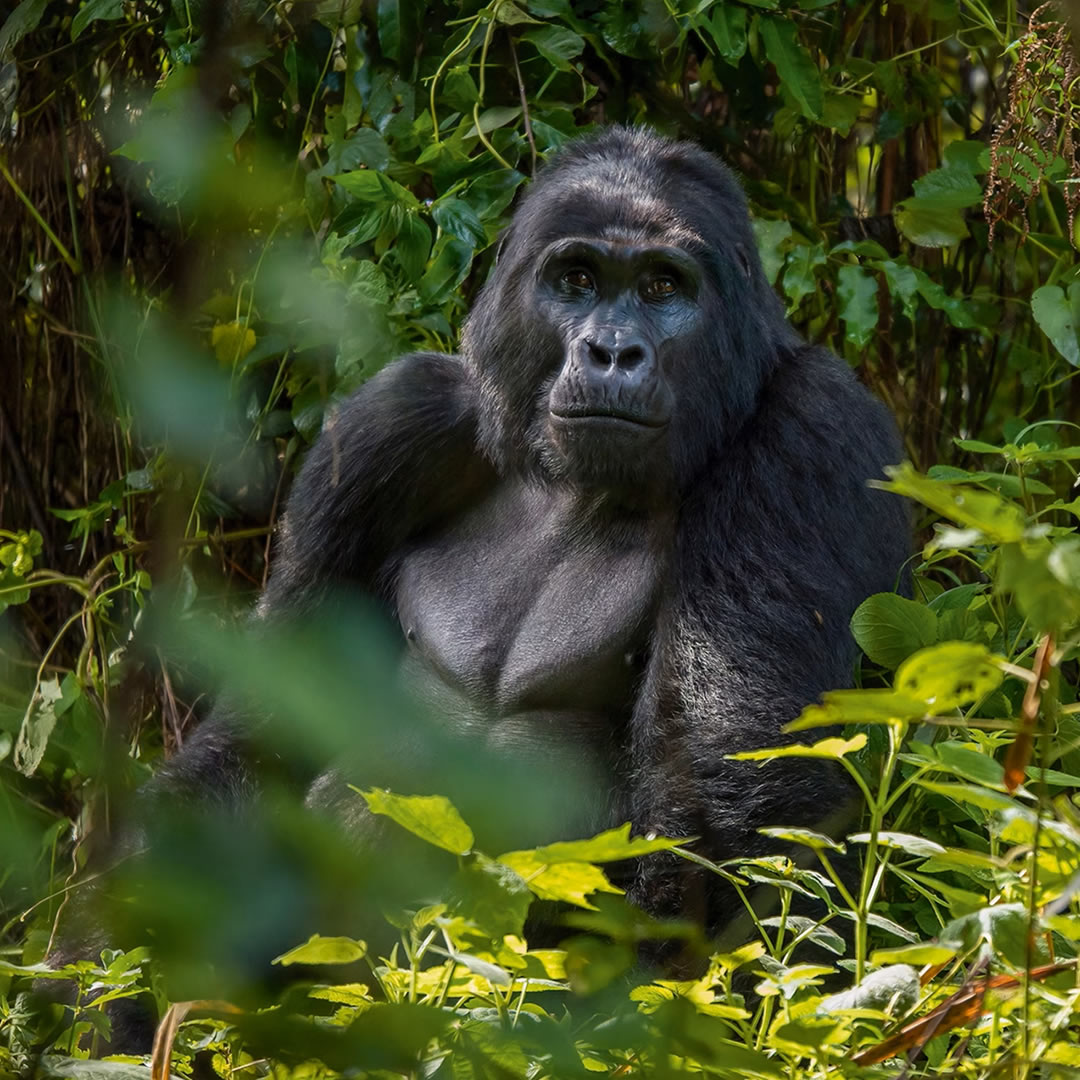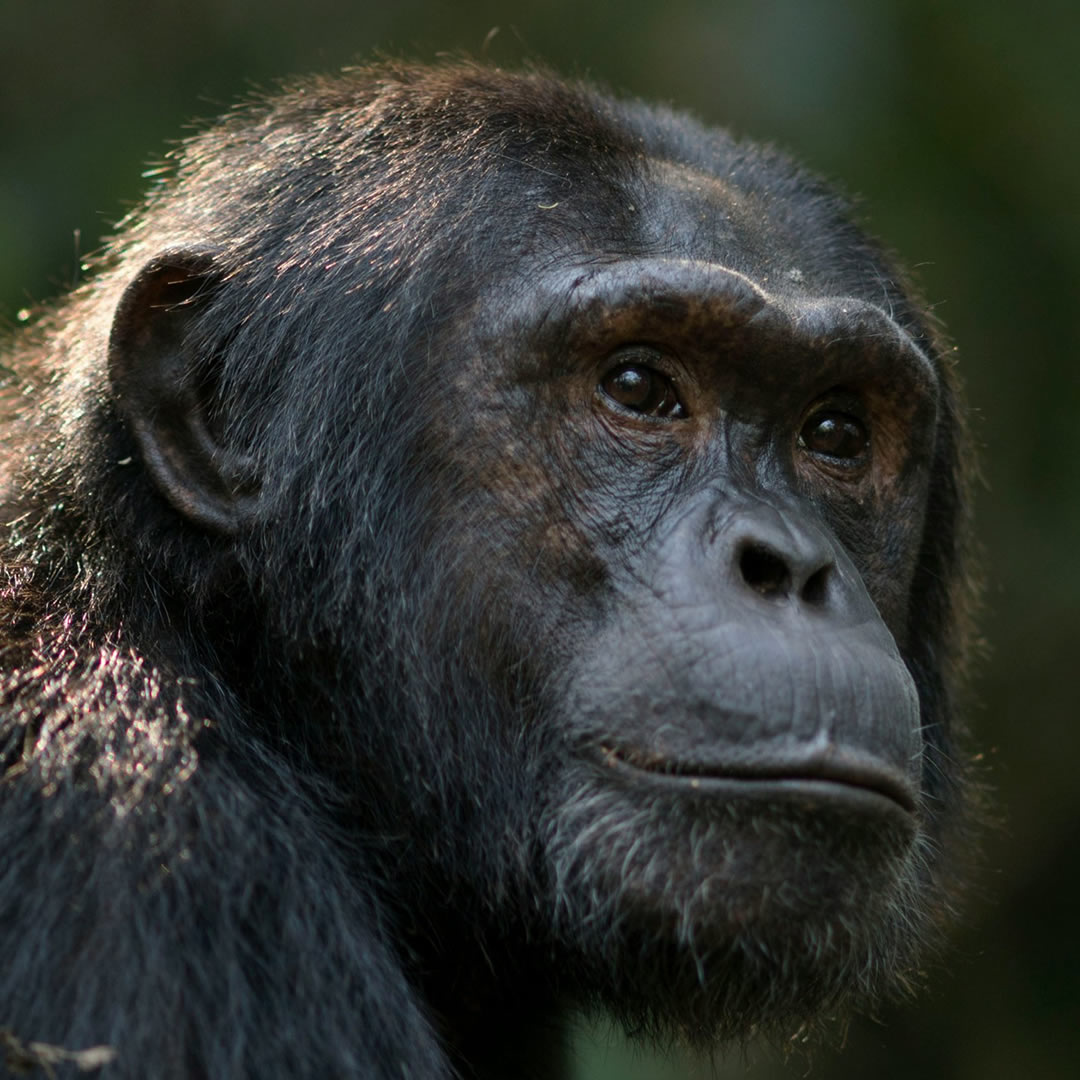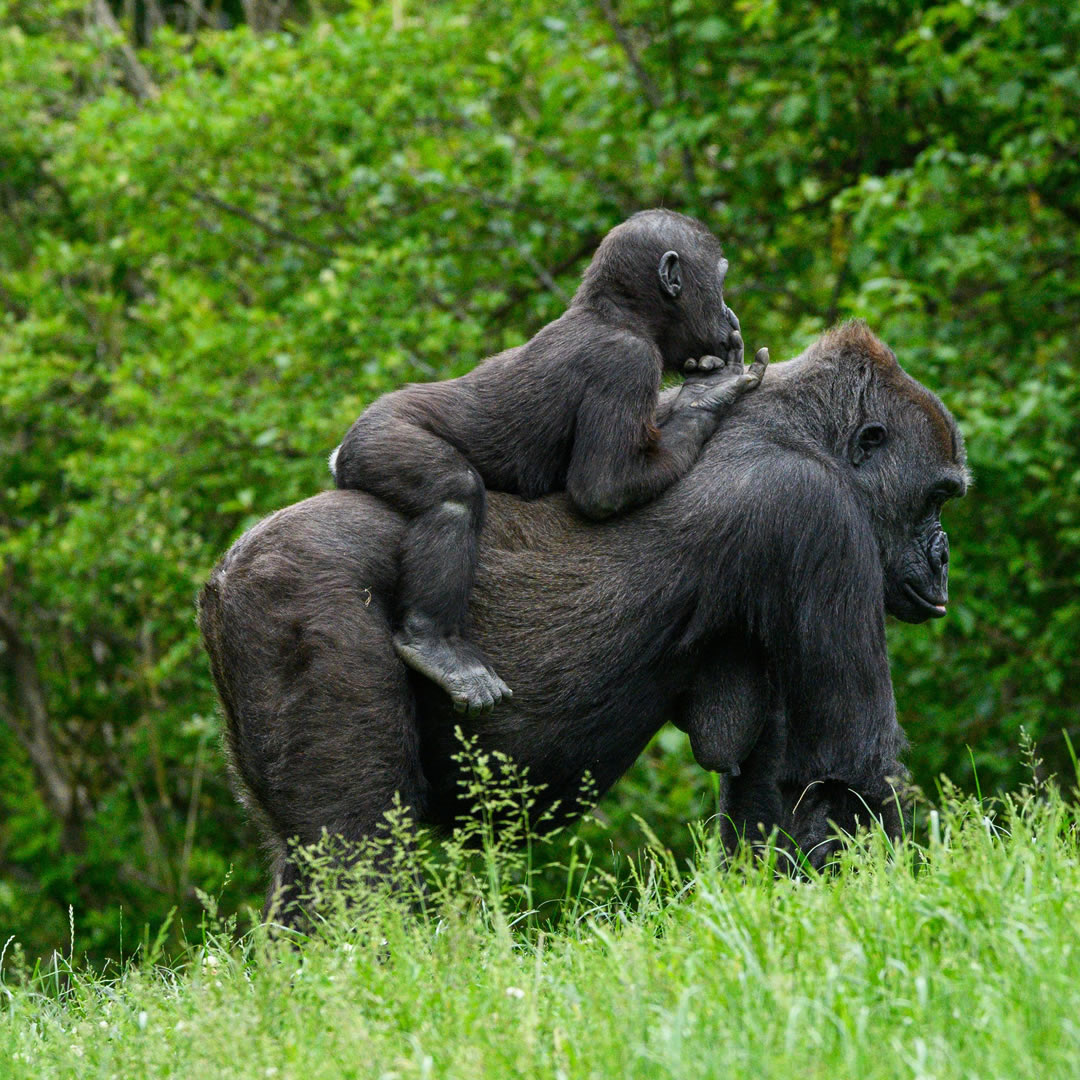
Bwindi Impenetrable National Park has an area of 331 square kilometres and an altitude of 1190 to 2607 above sea level. The park is located in southwestern Uganda on the rim of Rift Valley, with hillsides covered by mist and sheltered by rainforests. Bwindi is a UNESCO World Heritage Site due to its biologically diverse species. The park has over 400 species of plants and an estimated population of 320 highly endangered mountain gorillas, about half of 800 of the world's population. Many of these gentle giants are habituated and can be tracked easily. While hiking in this magnificent forest, you will understand where its name originated. Bwindi is the only park in the world where mountain gorillas and chimpanzees share the same habitat. The main tourist attraction is mountain gorillas trekking. There are over 300 species of birds and approximately 200 butterfly species. There are 120 animal species, including 11 primates, which include ( Mountain Gorillas, black and white colobus, chimpanzees, red-tailed monkeys, De Brazza monkeys, blue monkeys, L’Hoest’s monkeys, Demidoff’s Galago, Baboons, Spectacled Galago & Potto).
Bwindi Impenetrable Forest (or, officially, Impenetrable National Park) is an ancient, deep forest rising up along the south western border of Uganda. Climbing up along the slopes of a mountain range, the park consists of a series of narrow, steep valleys, deep green and cloaked in mist. The park is an old and complex ecosystem with a wealth of biodiversity and within its depths lies a rare and striking world. Due to the dense undergrowth and rugged terrain, large portions of it can only be reached on foot, preserving its primordial nature. Forest elephants, giant forest hogs, hundreds of butterfly species and several types of primate roam beneath the thick canopy of trees.
Bwindi Impenetrable National Park has so many habituated mountain gorilla groups located in different regions of the forest. This means that its very possible to get gorilla permits when you decide to plan a gorilla tour to Bwindi. These regions include Buhoma in the north with 3 gorilla families, Ruhija in the East with four gorilla families and the rest of the gorilla groups are in the south of the forest.
Bwindi Impenetrable National Park is open for gorilla trekking all year long, but the best times to go are from June to August and December to February. This is when forest trails are relatively dry and therefore less slippery. Also, your chance of viewing gorillas in dry weather is higher during these months. This might result in a better overall experience, and taking photos will be easier.
Bwindi Impenetrable National Park has a wet but mild climate. Temperatures remain consistent throughout the year due to its closeness to the equator. Daytime temperatures of around 22°C/72°F are usual, with a significant drop at night to about 12°C/54°F.
Bwindi might receive rain at any time of year. As a rule, however, the months of June and July are the driest, while March to May and September to November are the wettest. Waterproof clothing and hiking shoes are essential.
Bwindi Impenetrable National Park supports approximately 460 mountain gorillas. Two-thirds of these are members of habituated family groups that can be tracked by visitors. Other Albertine Rift endemics include L’Hoest’s monkey, Rwenzori three-horned chameleon and 23 species of bird. The park is also home to unhabituated chimpanzees and a secretive population of perhaps 100 forest elephants. More regularly encountered forest dwellers are bushbuck and several species of duiker. Bwindi is an important conservation hot spot that supports many endangered creatures including mountain gorilla, chimpanzee and forest elephant. Of the 120 mammal species recorded, black-and-white colobus and L’Hoest’s monkey are most frequently seen by casual visitors. A checklist of 350 birds includes many rarities, notably 23 Albertine Rift endemics and 14 species recorded nowhere else in Uganda. Butterflies are also something of a specialty, with an impressive list of 220 species, three of which are unique to the park.
By Air: Daily flights to Bwindi from Entebbe Airport or Kajjansi land in Kihihi Airstrip offer easy access to the Buhoma gorilla trekking region north of Bwindi. Aerolink operates two daily morning and afternoon flights. After landing, you will proceed one 1 hour 30 minutes drive to Bwindi.
The other option is to fly from Entebbe International Airport or Kijjansi to Kisoro Airstrip and then drive to Bwindi. This option allows easy access to Bwindi regions like Rushaga and Nkuringo gorilla trekking regions on the park's southern side. Based on Aerolink's schedule, flights to Kisoro Airstrip operate only in the morning due to strong winds in the area.
Early morning flights from Entebbe or Kijjansi take off at 7:45 a.m. and land at 8:55 a.m. at Kisoro. The same aircraft will depart from the Kisoro region at 09:10 a.m. and proceed to Kihihi Airstrip, arriving at 9:30 a.m. The departure flight from Kihihi to Entebbe is at 09:45 a.m. and arrives at 11:25 a.m. Afternoon flights from Entebbe to Kihihi will depart at 12:45 p.m. and arrive at Kihihi Airstrip at 1:55 p.m. Departure time to Entebbe is 14:05 p.m., arriving at 15:55 p.m. It takes approximately 1 hour and 20 minutes using chartered flights to Kihihi airstrip.
By Road: The drive is about 9-10 hours from Entebbe, covering a distance of 512 km.
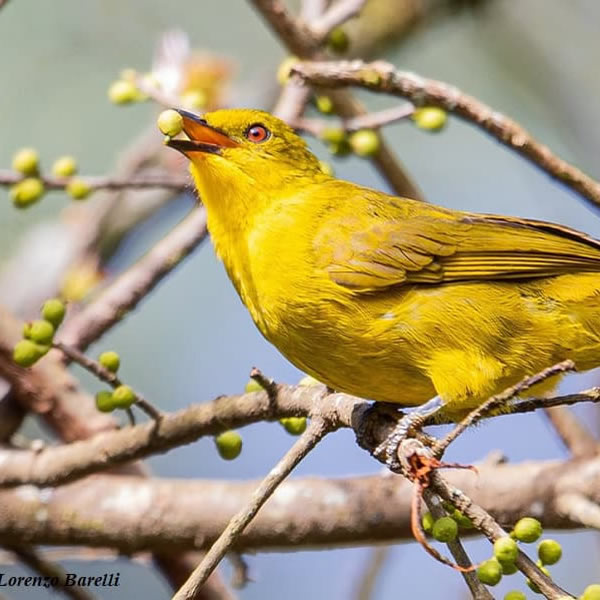
Bwindi forest has 346 species of birds and contains 90% of all Albertine rift endemics. Experienced birdwatchers can spot 100 species of birds per day. Visit Ruhija and Buhoma for good bird views. There are over 200 species of butter flies in Bwindi forest national park. Tourists can not only visit Bwindi for Mountain Gorillas but the place is also a bird watchers haven. The forest holds 76 of the 144 Guinea Congo biome bird species found in Uganda and are seen in the northern area. The area also qualifies for the afro Tropical highland biome bird species with actually 68 of the total 86, and for Lake Victoria- biome with 4 of the 12 species. This national park is gifted with 90% of the Albertine Rift endemics that are not so easy to spot in other areas of East Africa and 7 IUCN red data listed bird species. A skilled birder watcher can identify more than 100 species in a day session of birding.